
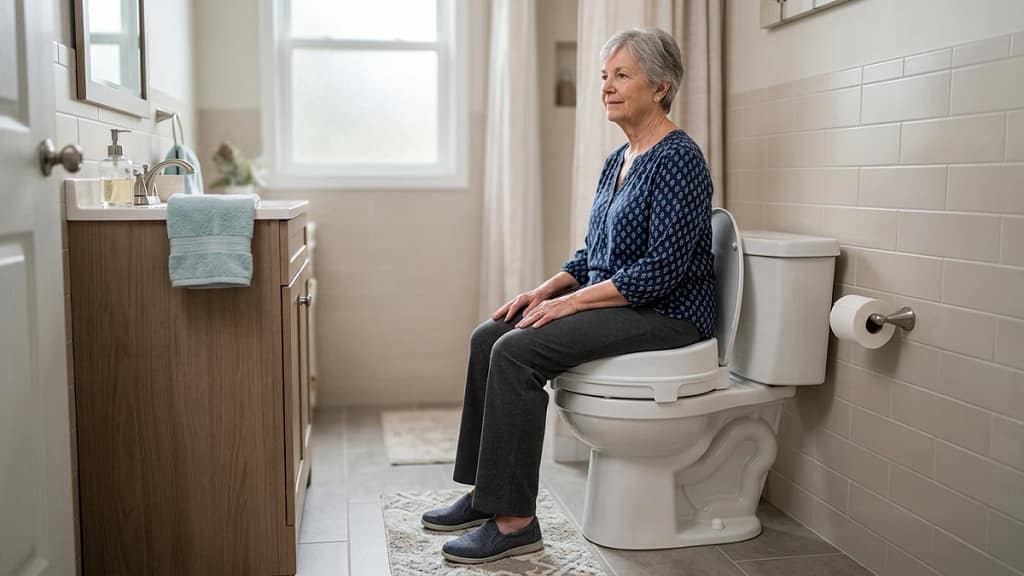
Many seniors do not start out thinking they need a raised toilet seat. The question usually comes up later, when using the toilet starts to feel lower, harder, or less controlled than before.
If you are wondering when should seniors use a raised toilet seat, the answer usually comes down to movement. When sitting down feels too low, standing up takes more effort, or the toilet starts to feel physically demanding, added height may help.
This guide explains the signs to watch for, which seniors are most likely to benefit, and when height alone may not be enough.
Recognizing the need for a raised toilet seat is only the first step. The next question is how much extra height actually helps without making the setup feel awkward or unstable.
Disclosure: As an Amazon Associate, I earn from qualifying purchases. This post may contain affiliate links. If you purchase through these links, I may earn a small commission at no extra cost to you. I only recommend products I would feel comfortable using in my own home. Learn more.
On This Page
- What It Looks Like When Toilet Height Starts Becoming a Problem
- Are Raised Toilet Seats Safe for Seniors to Use?
- Which Seniors Are Most Likely to Benefit from a Raised Toilet Seat?
- When a Raised Toilet Seat Makes Sense Instead of Replacing the Toilet
- When a Raised Toilet Seat May Not Be Enough
- What I Recommend
- FAQ
- Final Thoughts
Quick Answer
Seniors should use a raised toilet seat when the toilet starts to feel too low, standing up takes extra effort, or added height would make daily bathroom use safer and more comfortable.
Common signs include:
- sitting down feels harder than it used to
- standing up requires pushing heavily with the hands
- knee or hip stiffness makes toilet use uncomfortable
- the toilet feels low even if the rest of the bathroom is manageable
- extra height improves movement without making the setup feel unstable
In simple terms, a raised toilet seat makes sense when standard toilet height has started to interfere with comfort, confidence, or safe movement.
What It Looks Like When Toilet Height Starts Becoming a Problem

Toilet height usually becomes a problem gradually, not all at once. In many cases, the first signs are easy to overlook because the senior can still use the toilet independently, but the movement starts to feel slower, more effortful, or less comfortable than before.
This often shows up in everyday ways such as:
- pausing before standing up
- pushing heavily on the knees or nearby surfaces
- lowering down more carefully than before
- saying the toilet feels “too low”
- avoiding extra bathroom trips because the movement feels tiring
Example:
A senior may still be able to use the toilet independently but begin pausing before standing, pushing harder on the knees, or avoiding extra trips because the movement feels tiring. That kind of pattern often matters before the person starts asking for help directly.
Even a small height difference can change how the movement feels in real use. If you want a clearer sense of how much extra elevation usually makes a difference, this guide on how much height a raised toilet seat adds explains why a few inches can matter more than people expect.
Once toilet use starts feeling noticeably more demanding, it is often a sign that added height could make the movement more comfortable and more manageable.
Are Raised Toilet Seats Safe for Seniors to Use?
Yes, raised toilet seats can be safe for seniors when the seat fits properly, feels stable, and matches the user’s actual needs.
They are usually safer when:
- the seat is compatible with the toilet
- the height is appropriate for the user
- the setup feels secure during sitting and standing
- the user does not need more support than the seat can provide
They may become less safe when:
- the seat shifts or rocks
- the added height feels awkward or unstable
- the user still needs something secure to hold while standing
For example, a senior may benefit from extra height but still feel unsteady during transfers. In that case, the height may help, but the full setup may still need more support.
If you want a closer look at the bigger safety picture, this guide on whether raised toilet seats are safe for seniors explains what usually makes the difference.
A raised toilet seat is safest when it makes the movement feel easier and more controlled, not just higher.
Which Seniors Are Most Likely to Benefit from a Raised Toilet Seat?
Some seniors are more likely to benefit from a raised toilet seat because the movement itself becomes more physically demanding in predictable ways.
Seniors with arthritis or joint stiffness
Arthritis often makes toilet use harder because the problem is not just sitting lower. It is the combination of bending, pushing up, and controlling the movement without pain.
This is especially common when:
- knee pain makes deep bending uncomfortable
- hip stiffness makes lowering down feel restricted
- hand pain makes pushing off less effective
If arthritis is the main issue, this guide on raised toilet seats for seniors with arthritis explains what features tend to matter most.
Seniors after hip surgery
After hip surgery, even a normally manageable toilet can feel too low. A raised toilet seat is often used because it reduces how much the body needs to bend and can make bathroom use feel less demanding during recovery.
For example, a senior who was comfortable using a regular toilet before surgery may suddenly find the same toilet difficult for several weeks afterward.
In that situation, a raised seat can be a practical temporary solution. This guide on raised toilet seats after hip surgery explains how those needs often change during recovery.
Disabled adults with broader mobility limitations
Some seniors have broader physical limitations that make toilet use harder in more than one way. In those cases, added height may still help, but the decision usually also depends on stability, support, and how controlled the full movement feels.
If the user’s needs go beyond a simple height issue, this guide on raised toilet seats for disabled adults gives a better picture of how support needs change the choice.
In general, seniors benefit most when the toilet feels low enough to interfere with movement, but added height still has a realistic chance of making the routine easier.
Once those patterns are clear, the next question is whether added height is the right solution or whether the bathroom setup needs a bigger change.
When a Raised Toilet Seat Makes Sense Instead of Replacing the Toilet
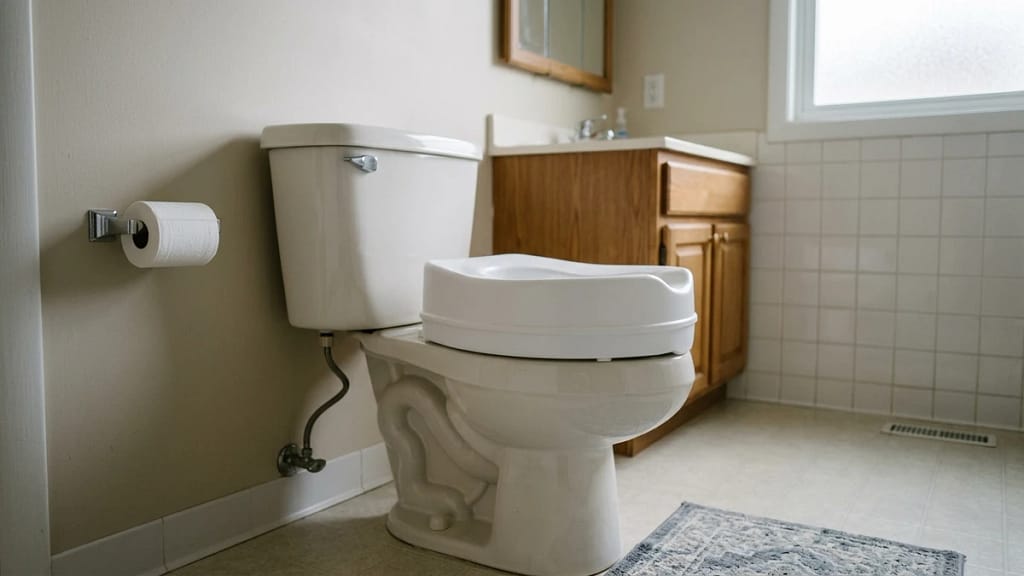
A raised toilet seat often makes more sense than replacing the toilet when the main problem is height and the user wants a simpler or more flexible solution.
This is especially true when:
- the current toilet is otherwise fine
- the need may be temporary
- a full toilet replacement feels unnecessary
- the user wants to test whether extra height actually helps
For example, a senior recovering from illness or surgery may need extra height for a period of time without needing a permanent bathroom change. In that case, a raised seat is usually a more practical starting point than replacing the toilet itself.
It also makes sense when the goal is to solve one specific problem without rebuilding the whole setup. If you want to think through that decision more carefully, this guide on how to choose a raised toilet seat explains when a raised seat is the right next step and what to consider before buying one.
A raised toilet seat is usually the better option when the toilet itself works fine and the real goal is to make sitting and standing easier without committing to a permanent bathroom change.
When a Raised Toilet Seat May Not Be Enough
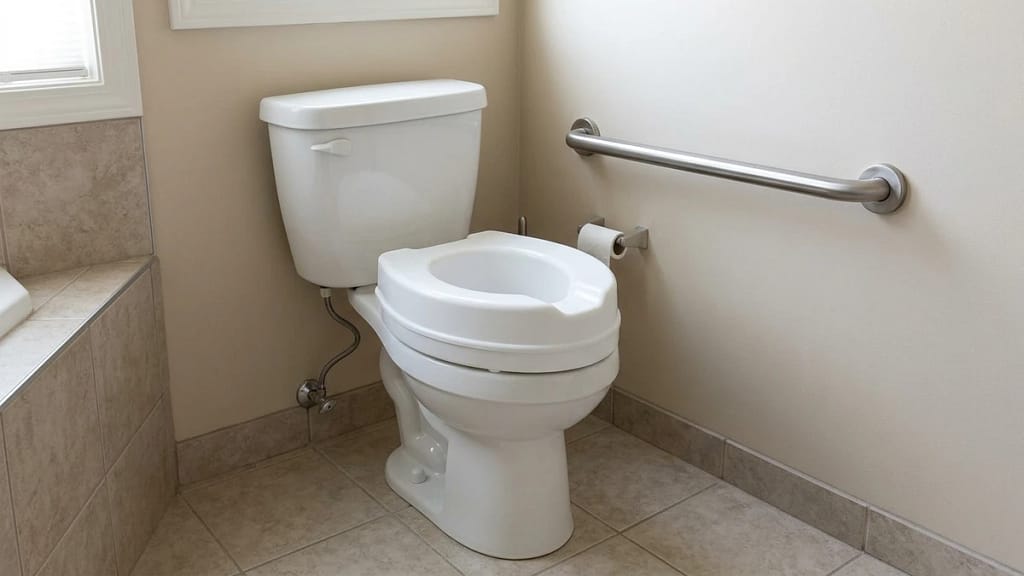
A raised toilet seat helps with height, but it does not solve every toilet-use problem.
That becomes more obvious when:
- standing still feels unsteady even after adding height
- the user needs something stable to hold during transfers
- balance is a bigger concern than bending
- the senior needs both height and side support
How to tell whether height alone is enough:
Pay attention to what still feels difficult after the added height is in place. If sitting and standing feel easier but the senior still reaches for walls, counters, or unstable surfaces, the real problem may be support rather than height alone.
In that situation, the setup usually needs more than elevation. It needs something stable to hold during the transfer.
Sometimes the better solution is to combine height with support. That is why some setups use a raised toilet seat together with a toilet safety frame rather than relying on height alone.
If you are considering that kind of combination, this guide on using a raised toilet seat with a toilet safety frame explains when the two can work together.
In other cases, the bigger issue is that the senior needs fixed support around the toilet rather than more height. If that sounds closer to the real problem, this guide on when seniors should add grab bars explains when height alone stops being enough.
A raised toilet seat is most useful when low toilet height is the main problem. When balance and support become equally important, the setup usually needs more than height alone.
What I Recommend
A raised toilet seat makes sense when the toilet has clearly started to feel low, physically demanding, or less comfortable than it used to.
A practical rule is:
- use one when sitting and standing are getting harder
- do not wait until every bathroom trip feels unsafe
- but do not assume that extra height alone solves balance or support problems
If the senior mainly struggles with bending or pushing up, a raised toilet seat often makes sense. If the bigger issue is instability or the need to hold onto something, then extra support may matter just as much as added height.
The best time to use a raised toilet seat is usually when the toilet has started to interfere with safe, confident movement—but before the problem becomes severe enough that height alone is no longer helpful.
FAQ
How do I know if a senior needs a raised toilet seat?
A raised toilet seat may help when sitting down feels too low, standing up takes extra effort, or toilet use starts feeling physically demanding.
Are raised toilet seats only for seniors after surgery?
No. Many seniors use them because of arthritis, stiffness, weakness, or general mobility decline, not just surgery.
Can a raised toilet seat help with arthritis?
Yes. It can reduce how much the knees and hips need to bend, which often makes toilet use easier.
Is a raised toilet seat enough if standing up feels unsafe?
Not always. If the main issue is balance or lack of support, added height may need to be combined with other support features.
Should seniors use a raised toilet seat permanently?
Sometimes yes, sometimes no. It depends on whether the need is temporary or part of a longer-term mobility change.
Final Thoughts
The answer to when should seniors use a raised toilet seat becomes clearer once toilet height starts affecting comfort, effort, or confidence during normal daily use.
For some people, that moment comes gradually through stiffness, pain, or reduced strength. For others, it happens more suddenly after surgery or a temporary setback. In either case, the real question is not whether the person “can still use the toilet,” but whether the movement still feels manageable and controlled.
When the toilet starts to feel too low, a raised seat is often one of the simplest ways to make everyday bathroom use easier.
